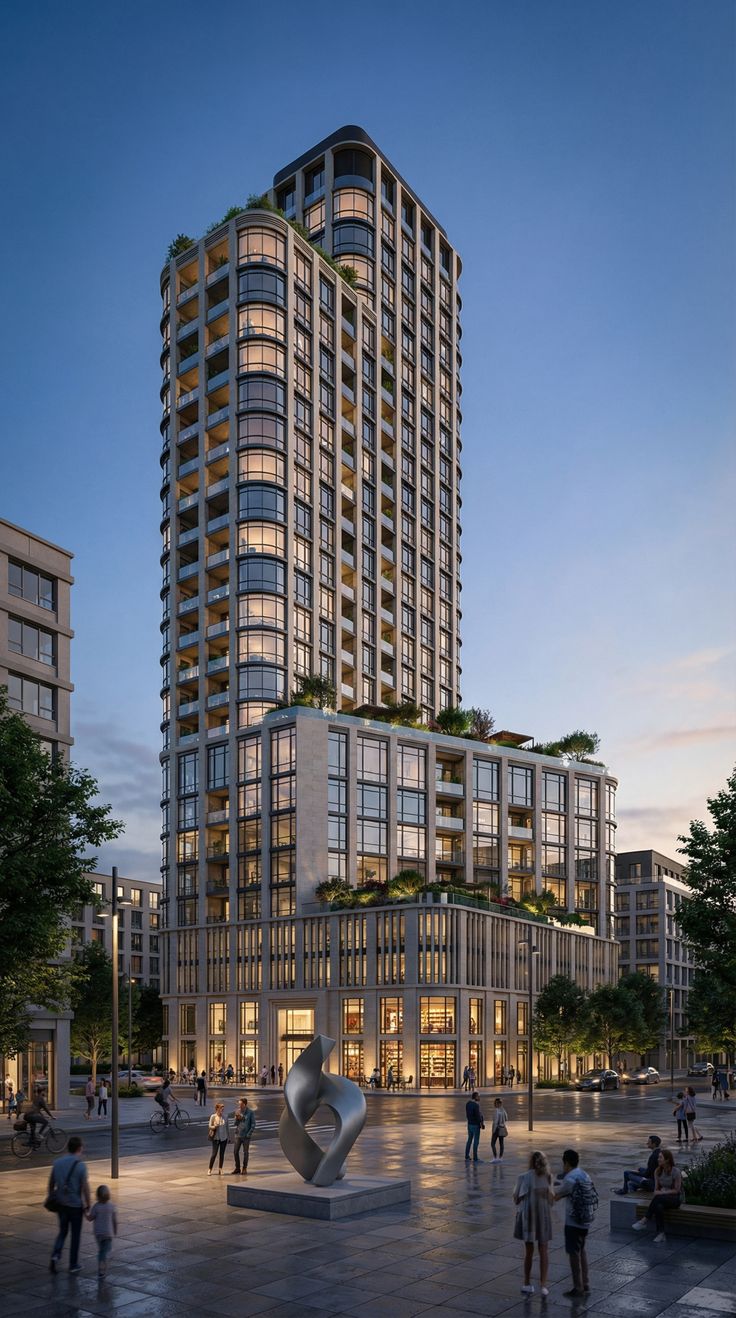

Beyond solar panels and good intentions — the mechanical and electrical systems decisions that actually move the needle on carbon.
Net-zero has become the default ambition for commercial development in South Africa. But the gap between ambition and delivery remains wide — because the engineering decisions that determine whether a building actually reaches net-zero are often made too late in the design process, or not made at all.
This is not a criticism of architects or developers. It reflects the way buildings are procured. MEP engineers are typically appointed at Stage 3, after the building form, orientation and envelope performance have been fixed. By that point, the most impactful decisions have already been made — often without anyone running the numbers.
The hierarchy of carbon reduction
Net-zero engineering follows a strict hierarchy. Passive design — reducing the energy demand of the building through orientation, shading and envelope performance — delivers the greatest carbon benefit for the lowest cost. Every kWh you do not need to generate is a kWh you do not need to pay for. Active systems — HVAC, lighting, controls — should then be sized to meet a demand that passive design has already minimised.
"Every kWh you eliminate through passive design is worth more than three kWh generated by solar. Design sequence matters more than technology."
- —Orientation optimisation: up to 15% reduction in cooling load for no additional cost
- —High-performance glazing: 20–35% reduction in solar gain on east/west facades
- —External shading devices: 25–40% reduction in peak cooling demand on exposed facades
- —Heat recovery ventilation: 60–80% reduction in ventilation energy consumption
- —Variable speed drives on HVAC plant: 30–50% reduction in fan and pump energy
- —LED lighting with daylight linking: 40–60% reduction in lighting energy
- —Rooftop PV: typically offsets 15–30% of total building electrical consumption
The role of the building energy model
An energy model is the primary instrument through which these decisions are evaluated. At Spoormaker, we run dynamic simulation models from Stage 2 — not as a compliance exercise, but as a design tool. The model tells us which interventions deliver the greatest carbon benefit for each rand spent, in the specific climate and for the specific occupancy of each project.
The combination of passive design, efficient active systems and renewable generation can reliably achieve net-zero operational carbon on most commercial typologies in South Africa. The constraint is not technology — it is design sequence. The earlier MEP engineers are involved, the more of the carbon reduction hierarchy can be accessed. By Stage 3, half of it is already closed off.